Jawai is about three hours from Udaipur or Jodhpur, and the question we get most on WhatsApp is not “will we see a leopard” but “how many days do we need”. This is the answer: a day-by-day plan for one, two or three days, built around the sunrise and sunset safaris, with the dam, the crocodiles, the villages and the day trips slotted in where they actually fit.
One thing first, because it trips up half our guests: Jawai is a region, not a town. The leopard country sits in the hills around Sena village in Pali district, and every plan below is measured from there. If you are still working out where to base yourself, read where your Jawai safari actually starts before you book a hotel. For the full list of sights, our things to do in Jawai page is the overview; this post is the schedule.
The short version: what fits in one, two or three days
| Time you have | What to do | Safari cost |
|---|---|---|
| One day (day trip or one night) | Sunset safari on arrival, sunrise safari before you leave. Dam sunset if you skip the evening drive. | ₹7,499 combo |
| Two nights | Day 1: sunset safari. Day 2: sunrise safari, Rabari village or dam and crocodiles, star gazing. Day 3: sunrise safari, leave. | ₹11,499 for three drives |
| Three nights | As above, plus a free day for Ranakpur and Kumbhalgarh between the safari days. | ₹11,499 to ₹14,999 |
Stays run from simple to five-star, all within the safari zone. If you want the safaris, stay and meals in one price, our safari and stay packages start at ₹7,499 per couple per night; solo travellers and small groups can join a fixed-date group trip from ₹3,499 per person.
Planning your Jawai safari?
Open-jeep leopard safaris from ₹1,000 · 95% sighting rate · expert local trackers.
Check Prices & BookWhatsApp UsWhat each day is built from
Here is what those plan lines mean on the ground, in the order most guests do them.
1. The leopard safari in the Sena hills
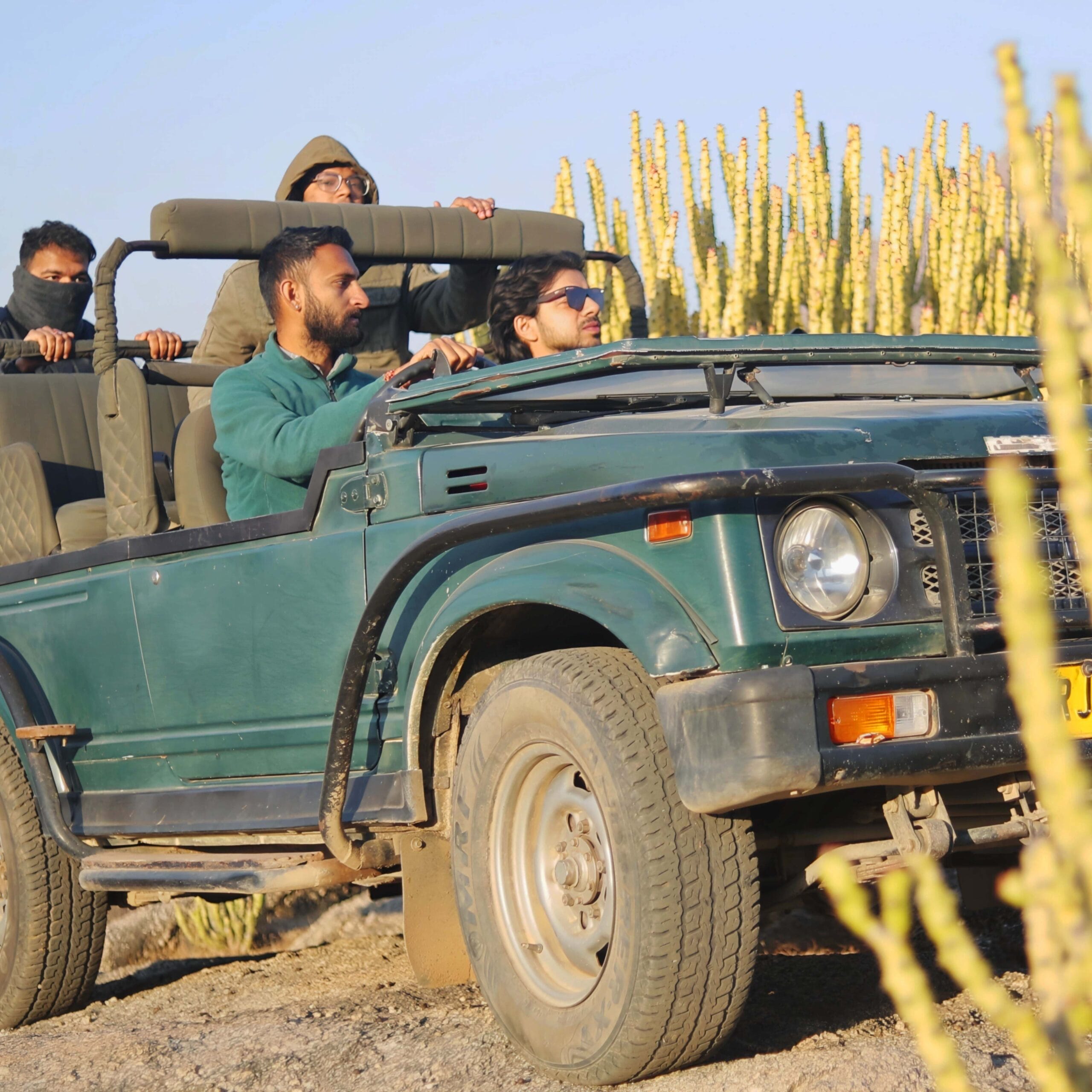
Start here. The safari is a private open Gypsy for up to six people with a local tracker who knows which cave each leopard is likely to be using this week. Sunrise drives leave around 6 AM; sunset drives leave between 4 and 5 PM depending on the season. Both run about three hours. There is no forest permit and no lottery — Jawai is a community conservation area, not a national park, so it is open all year and you can book a slot a day ahead in most months.
Price is per jeep, not per person: ₹4,000 for a sunrise or sunset safari, ₹7,499 for both on the same day, ₹14,999 for a private full day. Festival and long-weekend dates are ₹5,500. You confirm with a ₹1,500 advance and pay the rest at the jeep. If you only have one drive, our morning vs evening guide explains which to pick; if you have a full day, the combo gives you the best odds.
2. Sunset at Jawai Bandh
Jawai Bandh is the dam the whole region is named after, built in the 1950s across the Jawai river. In the evening the water turns copper, the hills behind go black, and the shoreline fills with birds coming in to roost. It is fifteen minutes from Sena and free to visit. Go on the evening you are not doing a sunset safari; the light is the same and the mood is completely different. We run a short evening drive that loops the dam and the villages around it if you would rather not drive yourself.
3. Crocodiles on the backwaters
The dam’s backwaters hold a large population of mugger crocodiles, and on a warm morning you will see them hauled out on the mud flats and rocks along the water’s edge. They are easy to spot from the shore with a phone camera; a zoom lens gets you the close portrait. Best from October to March, when water levels drop and the muggers bask. More on where and when in our crocodiles of Jawai Bandh post.
4. Migratory birds in winter
From November to February the backwaters become a stopover for flamingos, pelicans, cranes, geese and a long list of ducks and waders. Early morning on the shallow side of the reservoir is the spot. If you are a birder, tell the team when you book and the tracker will plan the safari route to end at the water. Our Jawai in winter guide covers what arrives when.
5. Hilltop and cave temples where leopards live
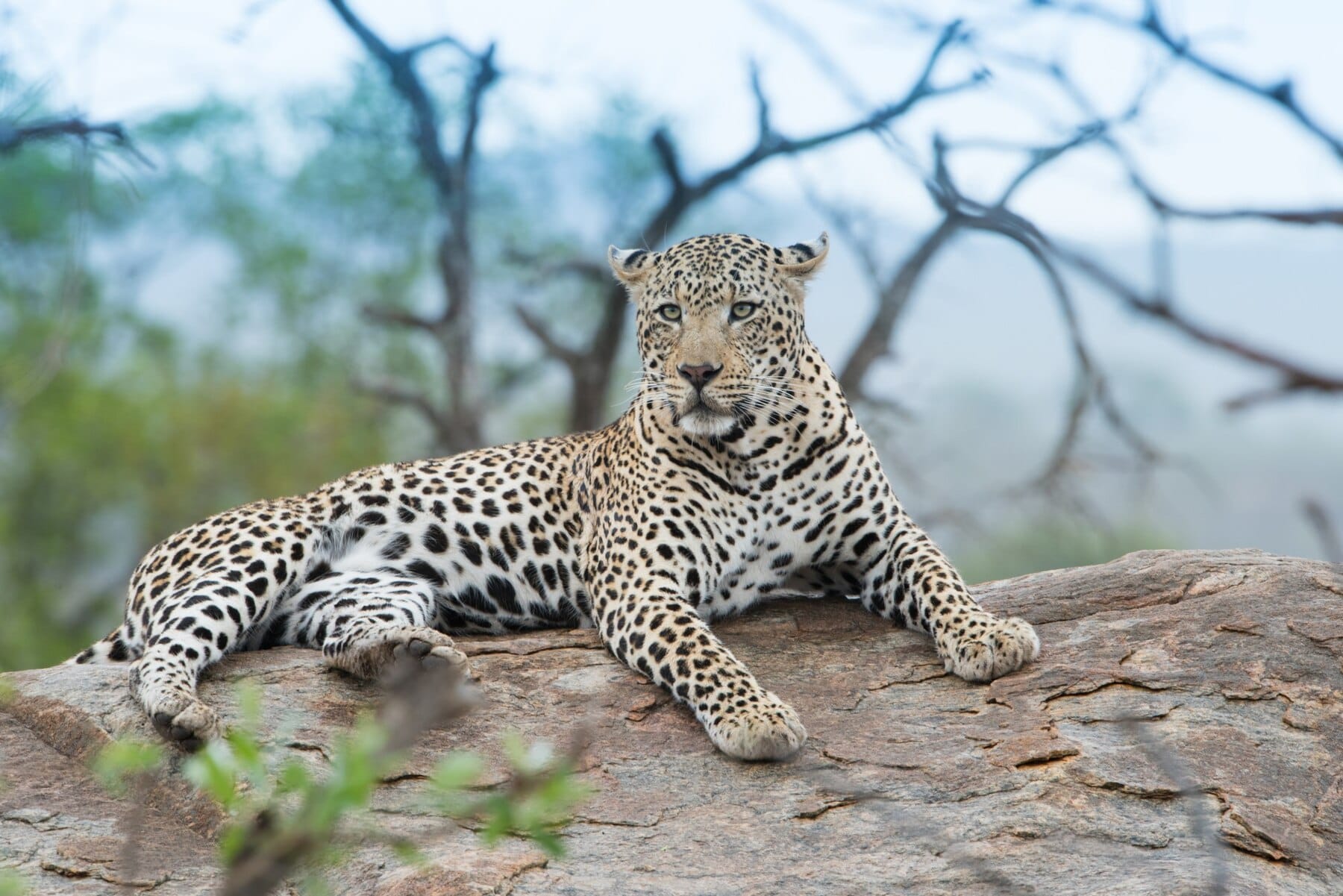
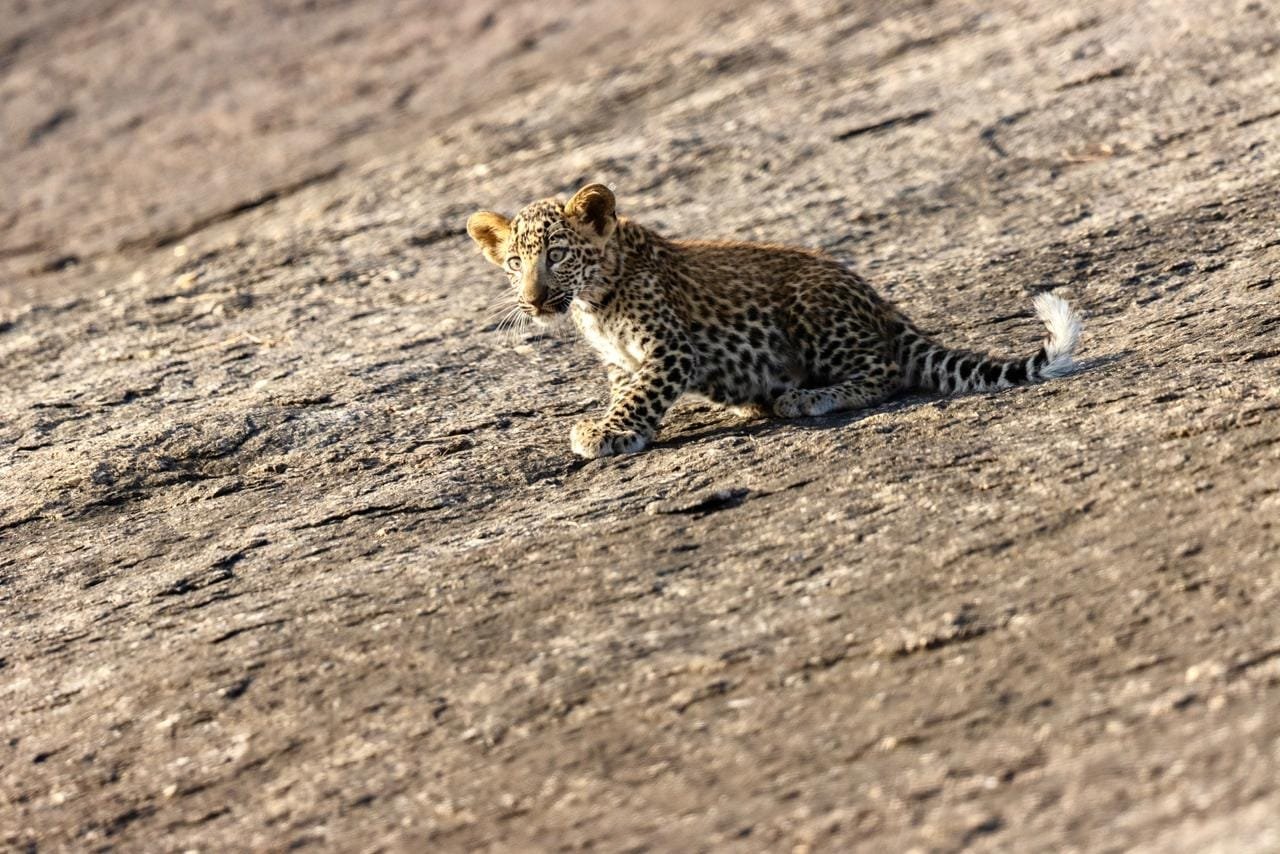
Jawai’s leopards den in the same granite hills that hold small Shiva and Devi temples, and the priests and the cats have shared these rocks for generations. Dev Giri, on its bare hill above the fields, is the best known: leopards are regularly seen on the slopes below the temple at dawn and dusk. The temples are working shrines, so go with a local, dress modestly, and stay in the jeep when the tracker says so. These sit inside the safari zone, so you will usually pass them on a drive rather than visit separately.
6. A Rabari village walk
The Rabari are the semi-nomadic shepherd community of this part of Marwar — the men in red turbans and white dhotis you see walking goats and sheep along the road at sunset. A village visit is a slow hour: tea, a look at the wool work and the cattle, and conversation through the tracker. It works best as an add-on between a sunrise and a sunset safari. Ask the team on WhatsApp and they will fit it to your day.
7. The granite landscape itself
Jawai’s rocks are some of the oldest exposed granite in India — huge rounded domes and boulder piles rising out of flat farmland, with caves at the base and lookouts on top. Even without a leopard, an hour on a boulder at golden hour with the fields, the dam and the Aravalli ridge in view is the picture most guests take home. Every safari includes a stop on a viewpoint; if you want a longer sit, say so.
8. Star gazing after dinner
There is almost no light pollution between Sena and the dam. On a moonless night the Milky Way is visible to the naked eye, and most stays will put a couple of chairs out in the open on request. Winter nights are clearest and coldest; carry a jacket. We wrote a short piece on star gazing in Jawai with the best weeks.
9. Sumerpur market
Sumerpur is the market town twenty minutes from Sena — ATMs, pharmacies, sweet shops and a proper Marwari bazaar. It is not a sight, but an hour there on a non-safari afternoon is a better look at everyday Rajasthan than any curated village tour, and it is where you will find a good lassi and a cheap jeep repair if you need one.
10. Day trip: Ranakpur Jain Temple
Under two hours from Sena, Ranakpur is one of the great marble temples of India: 1,444 carved pillars, no two alike, in a forested valley. Open to visitors from around noon (mornings are for worship), so it pairs naturally with a sunrise safari: drive after breakfast, temple by midday, back for the sunset drive. Modest dress, no leather inside.
11. Day trip: Kumbhalgarh Fort
Another two hours out, Kumbhalgarh is the hill fort with the 36-kilometre wall, the second longest in the world after the Great Wall of China. Combine it with Ranakpur on the same loop if you have a full free day; it is a long day, so do it between two safari days rather than on a safari day.
12. Mount Abu, if you are heading to Gujarat
Rajasthan’s only hill station is about 120 km away, roughly on the road to Ahmedabad. If you are driving in or out from Gujarat, Jawai and Mount Abu make a natural pair: a night in the hills, then two safaris here. Coming from Udaipur, skip it and give the extra night to Jawai instead — our Udaipur to Jawai guide has that route.
Getting here
- Udaipur: 150–180 km by road, about 3 hours. Nearest airport.
- Jodhpur: about 180 km, 3.5 to 4 hours.
- By train: Jawai Bandh station is closest to Sena; Falna has more trains. Taxis wait at both — send us your train details and the driver will be there.
- Every safari starts at our pick-up point near the bus stand in Sena (search “Jawai Safari Pick-up Point” on Google Maps). Not Bera, not Jawai Bandh station.
Frequently asked questions
Is one day enough for a Jawai itinerary?
One night with a sunset and a sunrise safari is the minimum that gives you a real chance at a leopard and a look at the dam. Two nights is the sweet spot; three lets you add Ranakpur and Kumbhalgarh.
What is the best month for this itinerary?
October to March has the most on offer: cool mornings, low water for crocodiles, migratory birds, clear night skies. Leopard sightings are good all year, including the monsoon, when the hills are green.
Can I do the safari without booking a stay?
Yes. Safaris are booked per jeep and you can stay anywhere in the region, or day-trip from Udaipur. Just be at the Sena pick-up point at your slot time.
Are the safaris suitable for children and older guests?
Yes. The jeep is open but the drive is on farm tracks, not rough off-road, and the tracker keeps a safe distance from the animals. Carry a jacket for sunrise drives in winter and water for sunset drives in summer.
How much does a full Jawai trip cost?
Two safaris are ₹7,499 per jeep for up to six people. Add a stay from ₹7,499 per couple per night for a package with meals, or pick your own hotel. Ranakpur and Kumbhalgarh are a taxi fare and small entry tickets. Our cost guide breaks the whole trip down.
Ready to plan it?
Tell us your dates and how many of you there are and we will suggest the slots and, if you want, a stay to match. Message us on WhatsApp, call +91 97837 98809, or book a safari online in two minutes.
Planning your Jawai safari?
Open-jeep leopard safaris from ₹1,000 · 95% sighting rate · expert local trackers.
Check Prices & BookWhatsApp Us